
The Shallows: What the Internet is Doing to Our Brains is a book that dramatically changed the way I look at the Internet. You don't need to read this book because the title says it all - your suspicions are correct, the Internet is NOT very good for our minds.
The Internet has a pretty dire effect on our powers of attention, it cuts our attention span down from hours to the length of the average YouTube video (4 minutes and 20 seconds)
The Internet is detrimental to our capacity to think deeply to solve complicated problems or make good decisions. The Internet tries to deliver us the solutions to our problems as quickly as IP packets can traverse cyberspace, sometimes in as little as 1.5 seconds, the amount of time it takes to do a Google search.
The Internet is especially bad for our focus, our ability to think about one thing to the exclusion of everything else. The Internet is bar none the most effective distraction technology ever. It gives our brains the intermittent, unpredictable serotonin hits that it craves. In the past, you could turn off your computer or shut your laptop but now that the Internet comes with you everywhere in your pocket; beeping, buzzing, vibrating, and ringing - incessantly demanding your attention.
The Internet disrupts the formation of long-term memory The Internet so overloads our short-term, working memory that we're not able to properly process information into our long-term memory. Kind of like if you opened every software application on your computer while simultaneously trying to render a video.
History of information technology
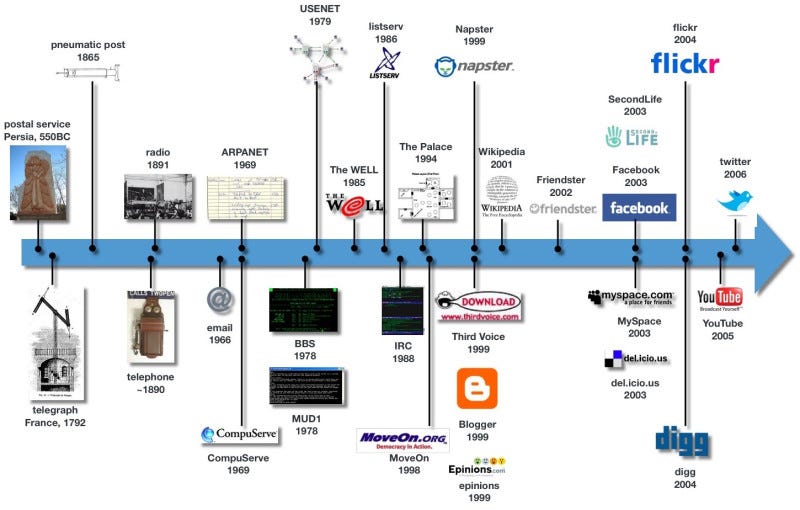
The book charts the course of human cognitive development that parallels (and perhaps follows) the development of media technologies from Sumerian tablets to Facebook.
For the last five centuries , ever since Gutenberg’s printing press made book reading a popular pursuit , the linear , literary mind has been at the center of art , science , and society . As supple as it is subtle , it’s been the imaginative mind of the Renaissance , the rational mind of the Enlightenment , the inventive mind of the Industrial Revolution , even the subversive mind of Modernism . It may soon be yesterday’s mind.
(p. 10)
Calm , focused , undistracted , the linear mind is being pushed aside by a new kind of mind that wants and needs to take in and dole out information in short , disjointed , often overlapping bursts — the faster , the better .
(p. 10)
Distraction
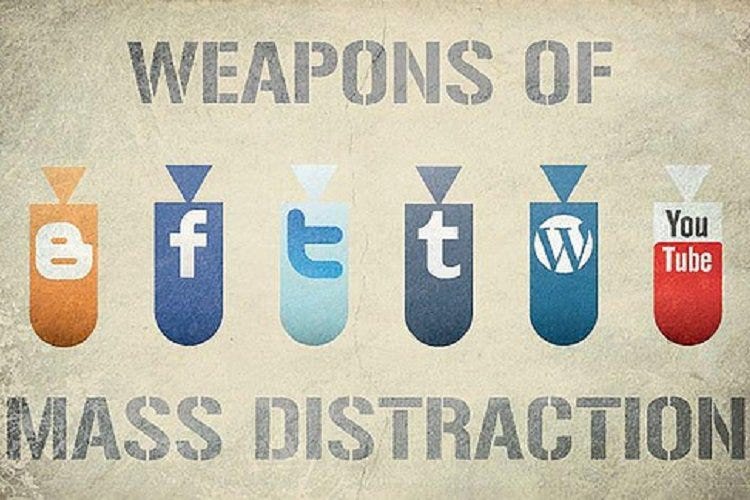
A lot of leading technologists and public intellectuals are deeply concerned with what kind of civilization we'll have in the coming decades if the general population continues to use this technology that so voraciously consumes our attention and has an effect on our minds similar to chronic heroin use. Our civilizational apocalypse may not result from an errant asteroid, destruction of the environment, unfriendly AI, or nuclear war - it may be from extremely potent distraction technology.
The Web provides a convenient and compelling supplement to personal memory , but when we start using the Web as a substitute for personal memory , bypassing the inner processes of consolidation , we risk emptying our minds of their riches .
(p. 192)
The “frenziedness of technology,” Heidegger wrote , threatens to “entrench itself everywhere.” It may be that we are now entering the final stage of that entrenchment . We are welcoming the frenziedness into our souls .
(p. 222)
Perhaps you remember this ridiculous movie Swordfish that came out some time ago, you'll remember at the beginning of the movie when the criminal boss recruits the hacker he tests his skills by having a girl give him a blowjob while he hacks into a mainframe. It's a pretty silly scene but it's quite an apt metaphor for what this distraction technology is doing to our brains while we are trying to get meaningful work done on the Internet.
You have, of course, experienced this, you get on the computer with the ostensible purpose of getting some important task done yet you get drawn down the rabbit hole of YouTube videos, enticing thumbnail images, and clickbaity links or headlines. Several hours later, you have 20 browser tabs open, you're frenetically jumping between windows, you can't seem to hold your attention on one thing for more than 30 seconds and you haven't even completed the original thing you got on the computer to do! You've also surely had the experience of staying up late on your computer, tablet, or smartphone surfing the web into the early morning hours. Finally, you got to sleep but then you woke up on the wrong side of the bed and proceeded to have a mediocre day; being generally forgetful, unproductive, and in a bad mood. You're probably thinking...
Yeah, Jonathan, I know that chronic Internet use isn't very healthy for me, but the upsides are worth it! The Internet has profoundly improved the lives of many millions (if not billions) of people!
I have a very charmed life doing meaningful work that I love thanks to the Internet. But are we obligated to pay this steep biological cost for the convenience of our hybrid digital existence? If there were a way to enjoy heroin as much as you wanted but experience none of its self-destructive effects on your mind and body or become a slave to addiction would you try it? I would!
The good news is that you can enjoy and take advantage of the tremendous upside of the Internet with none of the dire downsides IF you habituate this working memory exercise routine...

